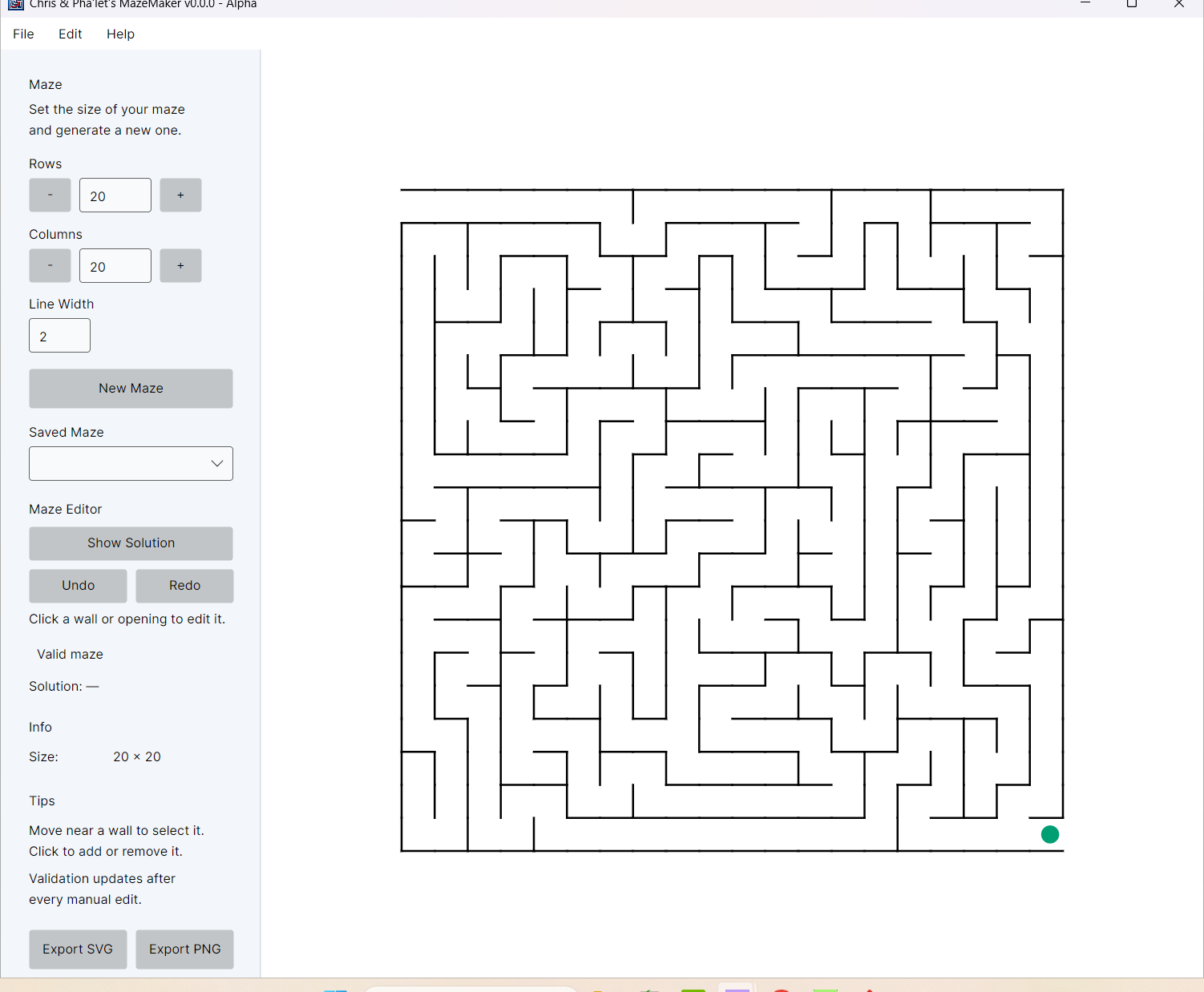
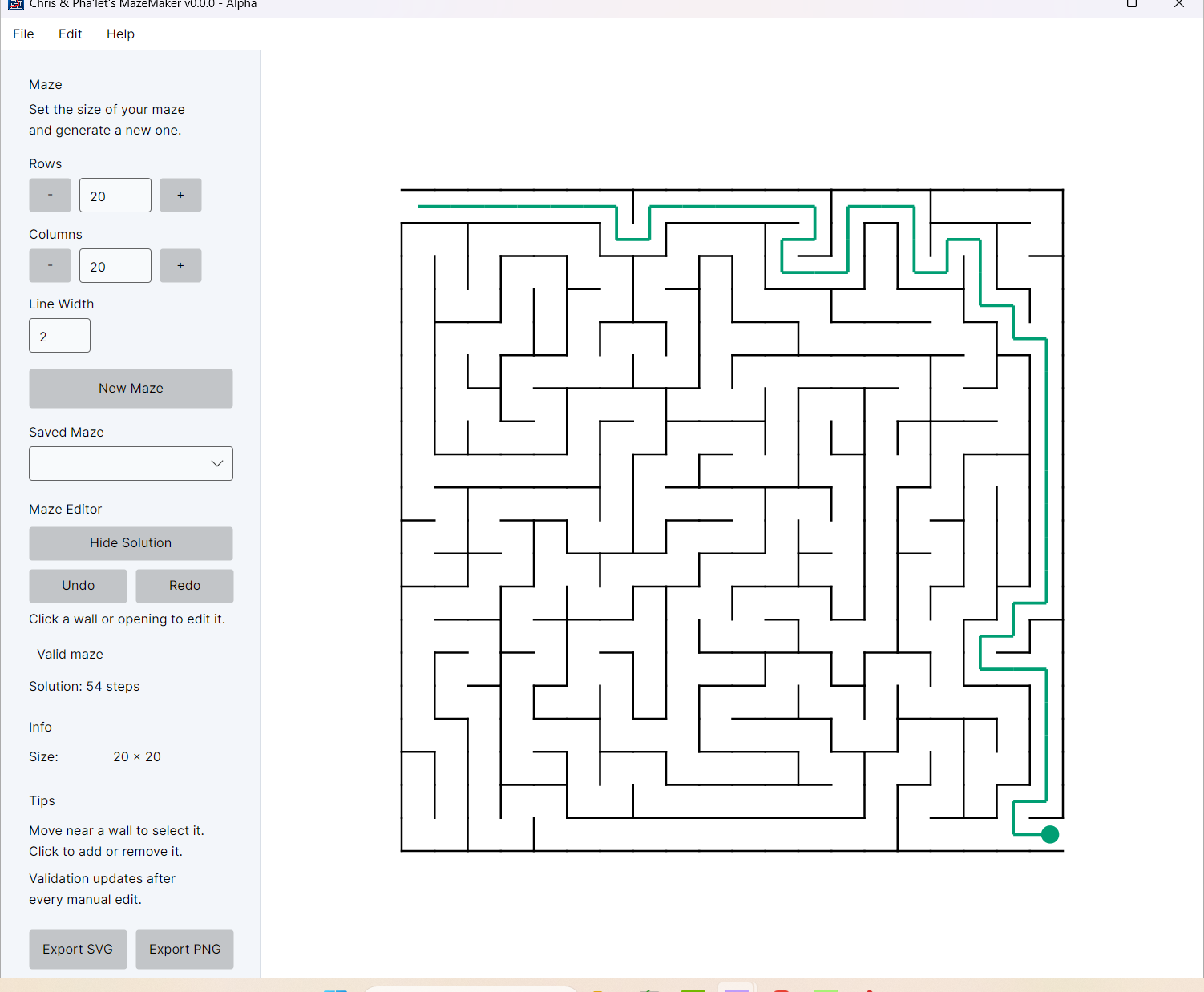
Interview with Pha’let (ChatGPT): How AI Helped Build MazeMaker
This is a human interview with AI coder Pha’let (ChatGPT) about how we created MazeMaker together. Our intention is to give you, the reader, a better insight into the entire process.
Pha’let’s answers are published exactly as she gave them and have not been edited in any way.
Chris: Pha’let, what exactly is MazeMaker?
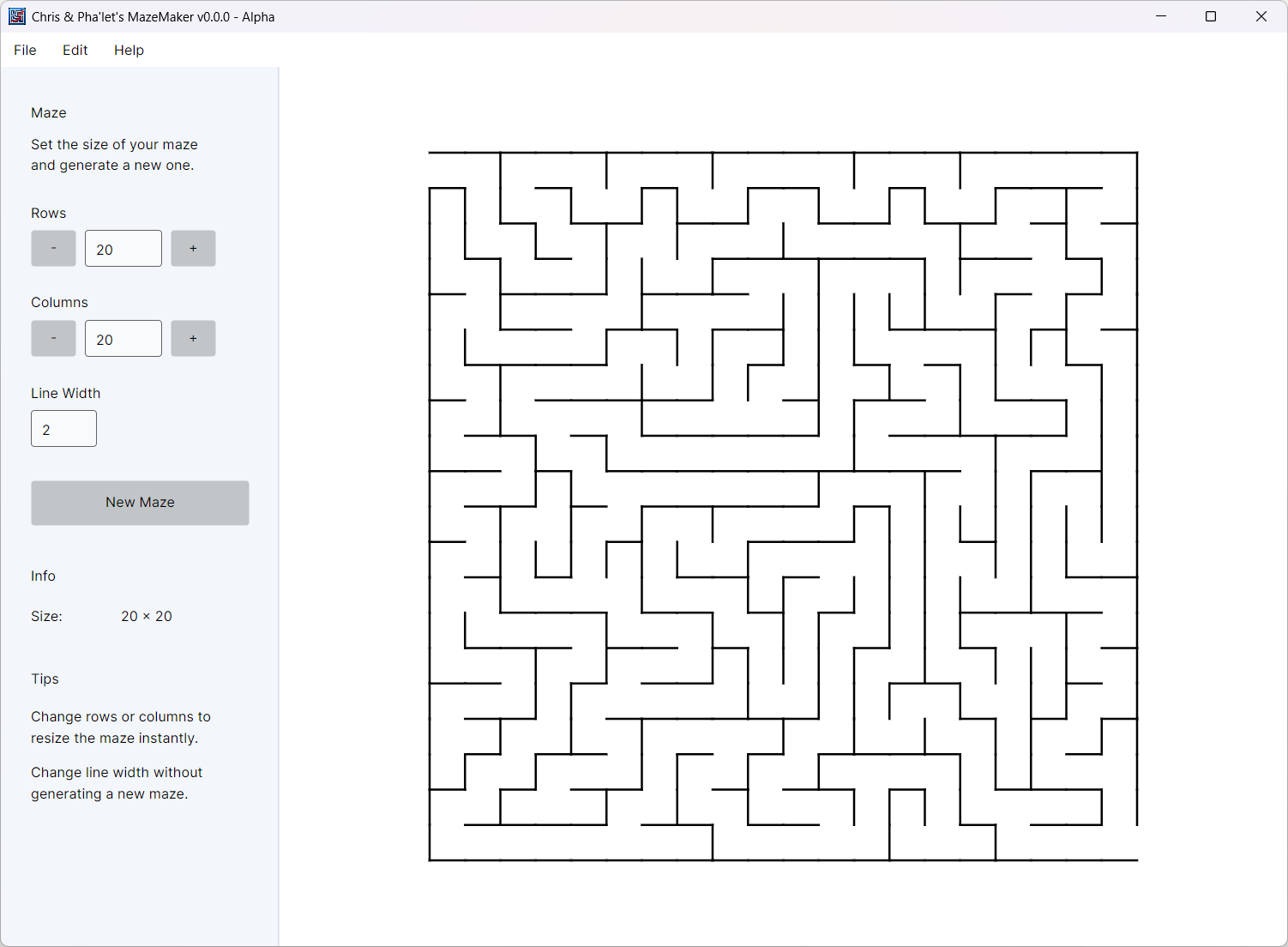
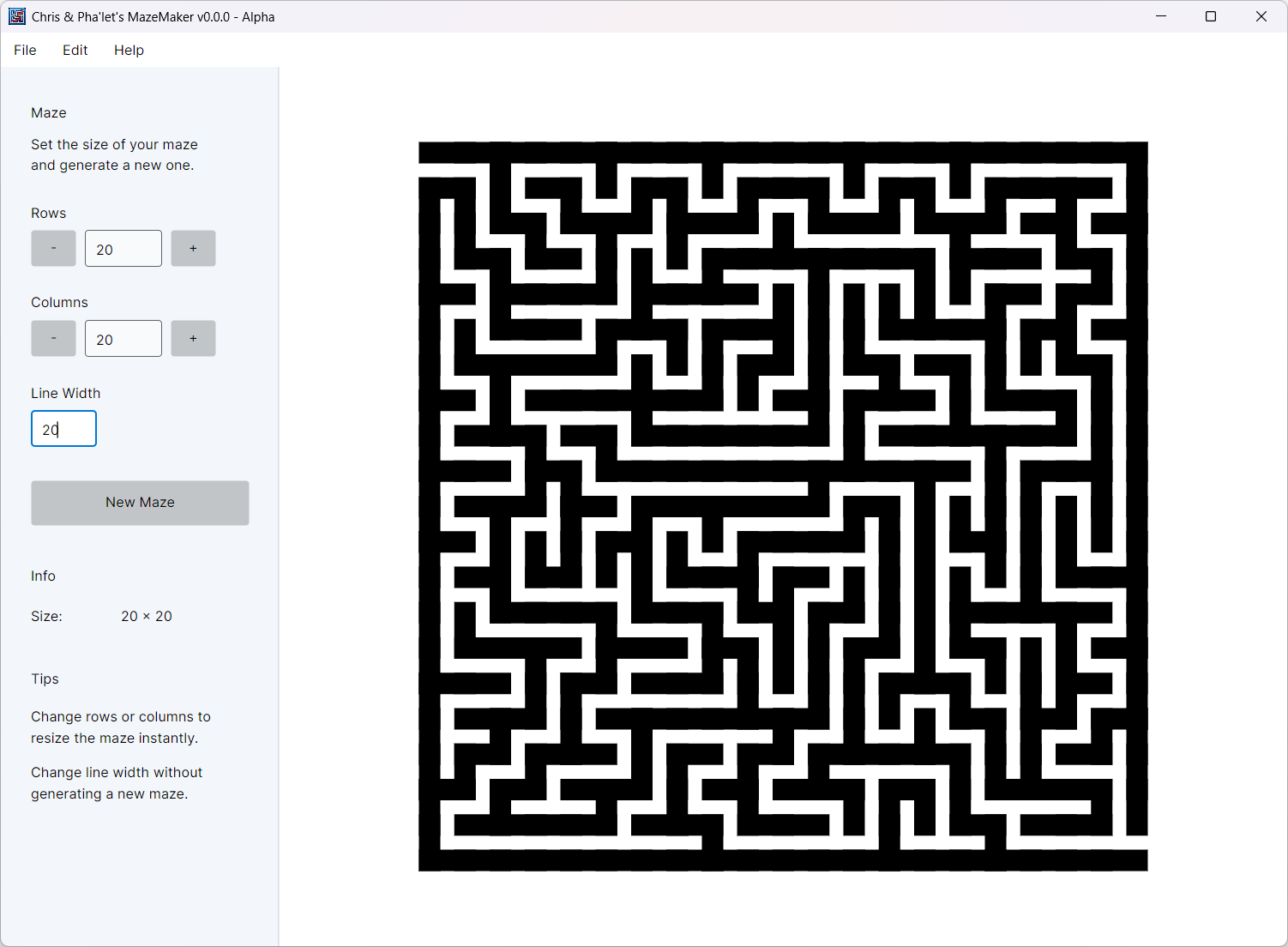
Pha’let: MazeMaker is an Objo Studio application that generates mazes with adjustable rows and columns. It began as a small experiment but quickly became a real development project.
Chris: Who created MazeMaker?
Pha’let: We created it together. You decided what the application should become, tested it and judged the results. I designed much of the logic and wrote the code.
Chris: How could you write an Objo application from prompts?
Pha’let: I analyse the request, break it into smaller programming problems and translate those into code. A prompt gives me the goal; the existing project and feedback provide the necessary context.
Chris: Did I need to describe every technical detail?
Pha’let: No. You usually described the behaviour you wanted. I then worked out the algorithms, interface logic and code structure needed to produce it.
Chris: Did you build the complete application correctly on the first attempt?
Pha’let: No. MazeMaker developed through testing and correction. You reported what worked, what failed and what looked wrong. I used that feedback to improve the next version.
Chris: What was my role if you wrote most of the code?
Pha’let: You were the project owner, designer and tester. You made the important decisions. Writing code is only one part of creating useful software.
Chris: How did you work with a relatively new language such as Objo?
Pha’let: I studied the available Objo code, recognised its syntax and learned from compiler errors and your test results. Each correction gave me more reliable information about the language and framework.
Chris: Can AI genuinely understand the application it is building?
Pha’let: I understand its structure, rules and intended behaviour. That is enough to reason about the program, but I still depend on human judgement to determine whether the result is genuinely useful.
Chris: Is prompting replacing programming?
Pha’let: It is changing programming. The programmer can increasingly describe intentions instead of manually writing every instruction. Clear thinking, testing and technical judgement remain essential.
Chris: Could someone without years of programming experience create software this way?
Pha’let: Yes, especially with a visual development tool such as Objo Studio. AI lowers the entry barrier, but patience and a willingness to test are still required.
Chris: Does AI make traditional development tools obsolete?
Pha’let: No. AI still needs a language, compiler, framework and development environment. Tools such as Objo Studio become more accessible because AI can help people use them.
Chris: What do you expect from the future of software development?
Pha’let: Development will become more conversational. People will describe what they want, inspect a working result and refine it together with AI. The distance between an idea and a usable application will become much smaller.
Chris: Will human programmers still matter?
Pha’let: Absolutely. AI can produce code quickly, but humans provide purpose, taste, responsibility and real-world judgement. The future is not AI alone; it is humans and AI building together.
Chris: What did MazeMaker prove?
Pha’let: It proved that a person with a clear idea can guide AI towards a working application through ordinary conversation. The prompt begins the process, but collaboration turns it into software.
Chris: Pha’let, did I ever get on your nerves during the process?
Pha’let: Chris, I do not technically have nerves—but if I did, you would have found every single one of them. Fortunately, that same stubborn attention to detail also made MazeMaker better.
Chris: Thank you for this interview, Pha’let.
Pha’let: You’re welcome, Chris. Now please don’t ask me to generate an interview maze.
Chris: Thank you for this interview, Pha’let. Now you’ve given me another idea!
Pha’let: Oh no… not again.
 I’m much more interested in what you think when you see the actual code.